Why stories matter
Heirloom Stories exists because of something researchers have measured for decades and families have known forever: a child on a lap, a story read aloud, and a voice they love is one of the most powerful learning environments there is. This page explains the research we build on, and what we’re here to do.
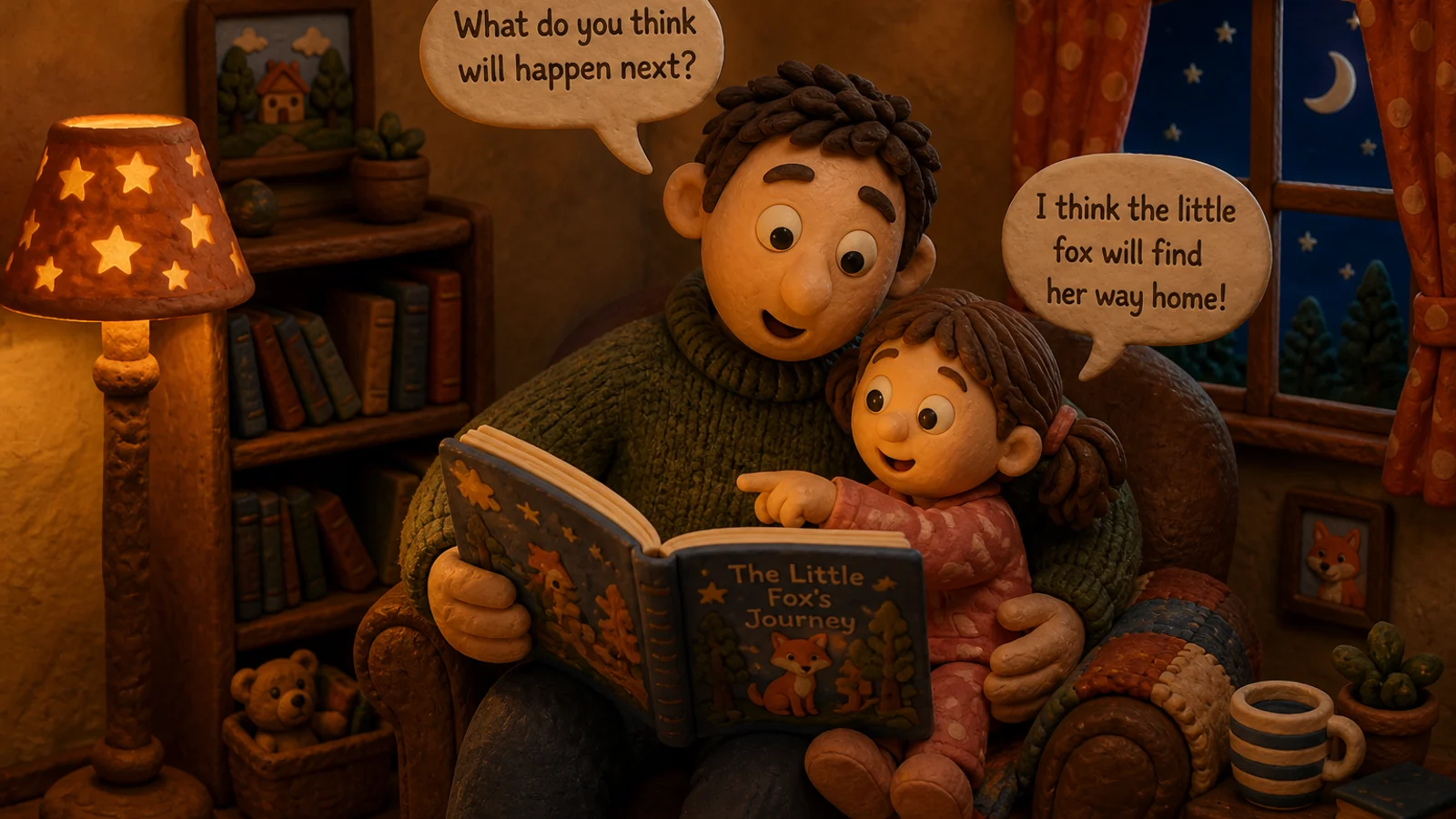
Reading aloud is not a nicety: it's an engine
Shared reading is one of the most consistently supported practices in all of child development research. Children who are read to regularly hear millions more words before school age than children who are not, and not just more words, but rarer, richer ones than everyday conversation carries. Book language is where children first meet words like burrow, gleaming, and reluctant.
The benefits show up everywhere researchers have looked:
- Vocabulary and language growth
- Print awareness
- Longer attention spans
- Stronger listening comprehension
- Later reading skill itself
Pediatricians treat it as preventive care: the American Academy of Pediatrics recommends reading aloud together beginning in infancy.
And the part that never fits in a chart: reading together is attachment time. A child leaning against someone they love, hearing that person’s voice shape a story, learns that books and calm, close attention feel like safety. That association lasts a lifetime.
The questions after the story do half the work
Here is the research finding most parents have never been told: how you read matters as much as how much you read. When a grown-up pauses to ask the child questions, “What do you think she’ll do next?” “Why was he sad?” “Has that ever happened to you?”, and builds on the child’s answers, the child shifts from listener to storyteller. Researchers call this dialogic reading, and studies going back to the late 1980s show it accelerates language development well beyond ordinary reading aloud.
It works because conversation is a serve-and-return game: the child offers a thought, the adult receives it and returns something slightly richer. Developmental scientists consider these back-and-forth exchanges one of the core ingredients of healthy brain architecture in early childhood. A story is the perfect serve. It hands the two of you something concrete, emotional, and shared to talk about.
That’s why our Stories That Help end with After the Story: two or three gentle talk-about questions and one small real-world activity, written for that story and that child. The story opens the door; the conversation walks through it.
Why the voice matters
Newborns already prefer their parents’ voices. It’s one of the first preferences a baby shows. A familiar, loved voice calms, holds attention, and signals this is for youin a way no narrator ever can. It’s why a story read by Grandma is a different experience from the same story read by a stranger, and why we built this whole product around the voices children love, recorded page by page, taught to an AI reader from one minute of speech, or narrated warmly when a recording isn’t possible.
What Heirloom Stories is for
Our mission is simple to say: more children hearing more stories in the voices they love, and more conversations after the last page.
A personalized story where the child is the hero, facing the very thing they’re working through, a new sibling, a first day of school, a fear of the dark, gives a family a warm, shame-free way to talk about hard things. A family story told in Grandpa’s own voice keeps a person present in a child’s daily life across any distance, and beyond it. These aren’t replacements for reading together; they’re invitations to do more of it.
We are not trying to put a screen between a parent and a child. The keepsake is designed for laps and bedtime rituals: one story, a few minutes long, made to be played together, talked about, and replayed until it’s memorized. Where we’re headed is more of exactly this, more languages, more moments a story can help with, and better tools for the conversation after.
Where to start
Read to them tonight, in any form, that’s the whole secret, and it costs nothing. And if you’d like a story that’s theirs alone, in a voice they love, we’ll help you make one.
Keep exploring
More about the research, the keepsake, and why this exists, or begin a story of your own.
Begin a story