August 4, 2026 · 5 min read
How to Record a Bedtime Story in Your Own Voice (Step-by-Step)
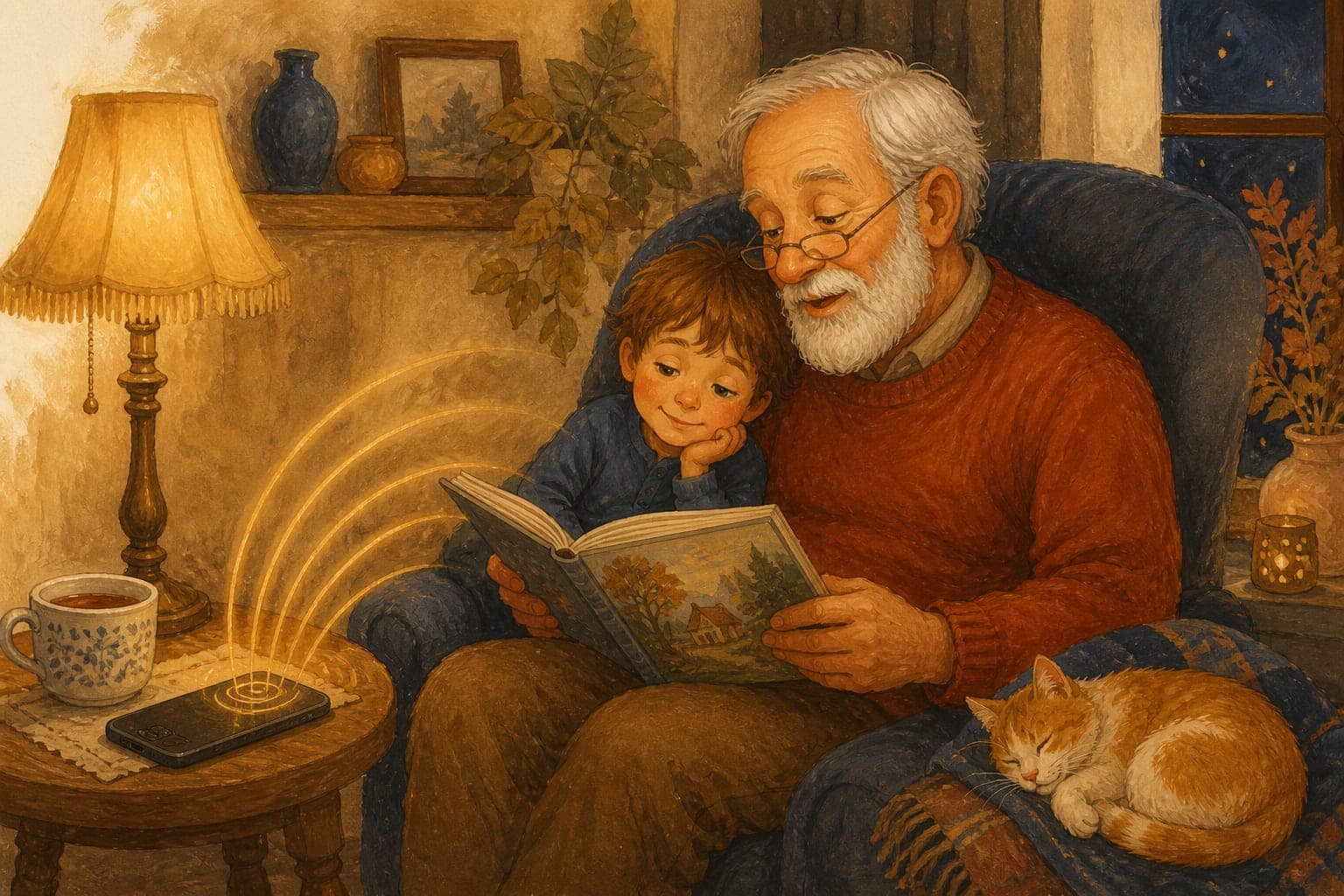
To record a bedtime story in your own voice, you need three things: a phone, a quiet room, and about twenty minutes. You don't need a microphone, editing software, or a good radio voice, children don't want a professional narrator, they want you, including the throat-clears and the funny voice you do for the wolf.
This guide covers the practical steps: choosing a story, getting clean audio from a phone, reading so it works at bedtime, and how to share the result so it doesn't die in a camera roll. At the end: what to do when recording a full book isn't possible, because of distance, illness, or time.
Step 1: Pick the right story
- Pick a book the child already owns, so they can turn the pages while your recording plays. Familiar beats novel here.
- Keep it under ten minutes read aloud: roughly a standard picture book. Bedtime recordings get replayed nightly; epics don't.
- Rhyme and repetition age well. Books with a refrain let the child join in, which is what turns a recording into a ritual.
Step 2: Set up the room (this is 80% of audio quality)
Echo, not microphone quality, is what makes home recordings sound bad. Phones have excellent microphones; bathrooms and kitchens have terrible acoustics. Fix the room and the phone will do its job.
- Record in the smallest, softest room available. A walk-in closet full of hanging clothes is a genuinely professional-grade recording booth. A carpeted bedroom with curtains is fine.
- Turn off anything that hums: HVAC, fans, dishwasher, fridge if you're near the kitchen.
- Put the phone in airplane mode, a notification chime mid-story means re-recording the page.
- Hold the phone 6–10 inches from your mouth, slightly to the side so your breath doesn't hit the microphone directly.
- Use the built-in Voice Memos (iPhone) or Recorder (Android) app. No special app needed.
Step 3: Read it like bedtime, not like a performance
- Slow down by a lot more than feels right. Nervous readers rush. Aim for 20–30% slower than your natural pace; it will sound warm, not slow.
- Pause two full beats at every page turn, and consider saying "turn the page…" the way classic read-along tapes did. It lets a small child keep up with the physical book.
- Say their name at the start. "This one's for you, Maya" is the line that gets rewound the most.
- Keep the mistakes that sound like you. A laugh, a mispronounced dinosaur, Grandpa losing his place, these become the beloved parts. Only re-record a page if the words are actually lost.
- Record page by page, pausing the recorder between pages, or make one file per page. Any mistake then costs you thirty seconds, not the whole book.
Step 4: Share it somewhere it will survive
The saddest fate for a recording like this is a text message thread. Put the file somewhere permanent and shared: a family photo album that syncs, a shared drive folder, or a private link the parents bookmark. Name the file with the reader, the book, and the date, in ten years, "Grandma reads Goodnight Moon, August 2026" will matter.
When recording a whole book isn't possible
Sometimes the person whose voice matters can't read a full book aloud, distance, illness, fatigue, or a voice that tires quickly. There are two good paths.
Record less, but record something. Even one page, or just "Goodnight, sweetheart, I love you," is a keepsake. Don't let the perfect version prevent the real one.
Let an AI reader learn the voice. Services like Heirloom Stories can take about one minute of clear speech and narrate an entire story in that person's voice, a story written specifically about the child, illustrated, and delivered as a private keepsake link. Done responsibly, this requires the speaker's consent, the voice is never used to train anything else, and it can be deleted anytime. It's how a grandmother whose voice tires after a paragraph can still read her granddaughter a whole story.
Frequently asked questions
What app should I use to record a bedtime story?
The one already on the phone: Voice Memos on iPhone or Recorder on Android. Both record at more than sufficient quality. The room you record in matters far more than the app or the microphone.
How long should a recorded bedtime story be?
Five to ten minutes, the length of one picture book. Recordings that get replayed nightly are short ones. If you want to record a chapter book, make one file per chapter.
Can I make a recording of a relative read a story if they can't read a whole book aloud?
Yes. Either record whatever they can manage, even a single goodnight message is treasured, or use a voice-narration service like Heirloom Stories, which needs about one minute of their speech (with their consent) to narrate a full story in their voice.
How do I record a story for a child who lives far away?
Record it exactly as described in this guide, then share it as a private link or synced album rather than a one-off message. Pair it with a copy of the physical book mailed to the child so they can turn the pages while your voice reads.