August 8, 2026 · 5 min read
Do Personalized Stories Actually Help Children Learn? What the Research Says
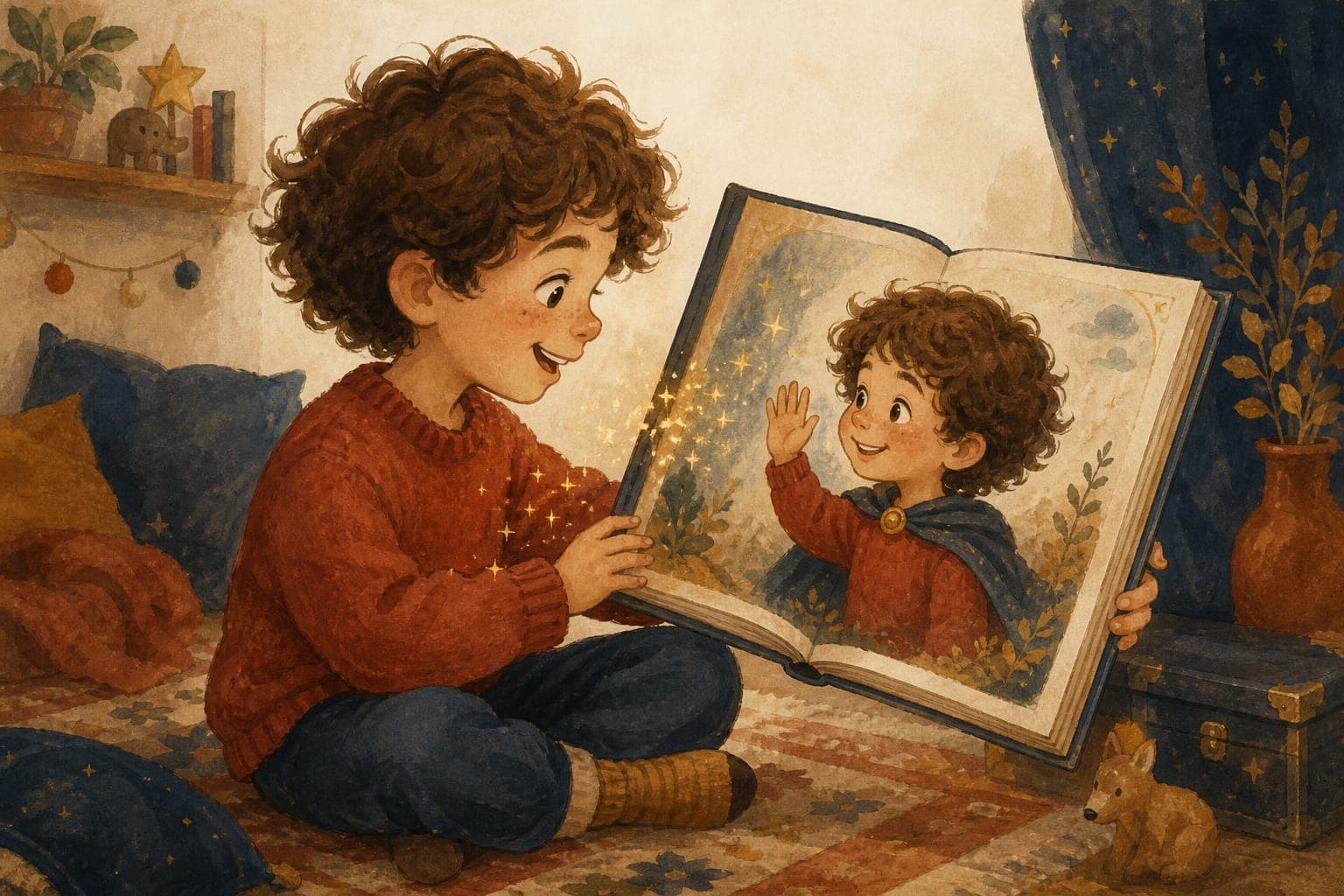
Yes, with caveats worth understanding. Research on personalized books finds that children attend longer, talk more, and in several studies learn new words better when a story features themselves rather than a generic character. The effect rests on two well-established mechanisms: children orient to their own name from about six months old, and information connected to the self is remembered better, psychologists call this the self-reference effect. But researchers who study personalized books are also clear that slapping a name on a stock template does little, and that the conversation around the book still does most of the work.
This article covers what the research actually shows, the difference between shallow and deep personalization, and how those findings shaped the way Heirloom Stories builds a story.
The attention mechanism: a child's own name
In a 1995 study, Denise Mandel, Peter Jusczyk, and David Pisoni showed that infants around four and a half to six months old listen longer to their own name than to other names with similar sound patterns, one of the earliest demonstrations of word recognition in infancy. The effect never goes away: hearing your own name captures attention involuntarily even in noisy rooms (the classic 'cocktail party effect'). For story time, that means a child's name in the text is a built-in attention reset button, each mention re-engages a wandering three-year-old in a way no plot twist can.
The memory mechanism: the self-reference effect
Since Rogers, Kuiper, and Kirker's 1977 experiments, memory researchers have repeatedly confirmed that information processed in relation to *yourself* is remembered better than the same information processed any other way. Developmental studies have extended this to young children: in 'ownership' paradigms, children as young as four remember objects assigned to them better than identical objects assigned to someone else (Cunningham and colleagues' work in the 2010s).
A story in which the child is the hero leverages this directly. The new vocabulary, the emotional arc, the lesson about the first day of school, all of it is encoded as *about me*, which is the encoding the developing memory system privileges most.
What studies of personalized books actually find
The most sustained research program on personalized books comes from Natalia Kucirkova and colleagues. In a 2014 study, Kucirkova, Messer, and Sheehy observed mother–child pairs reading self-made personalized books versus ordinary books, and found the personalized books elicited substantially more child talk and engagement, the exact behaviors dialogic-reading research identifies as the active ingredient of shared reading. Related experimental work has found children learn embedded new words better from personalized stories than from matched non-personalized versions.
Two honest caveats from the same literature. First, most studies are small, this is a young field, not a settled one on the scale of the reading-aloud research. Second, researchers distinguish sharply between shallow personalization (a name pasted into a template) and deep personalization (content that reflects the child's actual life, relationships, and current situation). The measured benefits concentrate in the deep kind, because that's what generates recognition, conversation, and self-reference, a child can tell when a story is genuinely about them.
Where personalization helps most: relevance without exposure
There's a second, less obvious benefit that clinicians who use stories therapeutically point to: a personalized story can match a child's exact situation while keeping the safe distance of fiction. A generic book about 'a bear who is scared of the dark' requires the child to translate; a story about a hero with their name, their bedroom, and their specific fear removes the translation while the story frame still lets them examine the feeling from one step away. We wrote more about that mechanism in how stories help children through big changes.
How this research shaped Heirloom Stories
The research pushed us toward three design choices. First, deep personalization only: every story starts with a guided interview about the child, their people, their pets, their world, and what the story should help with, so the personalization is the plot, not a find-and-replace. Second, the voice is part of the personalization: the self-reference effect and the familiar-voice research compound when the story about you is also read by someone who loves you. Third, the story ends with conversation: because the literature is unambiguous that adult–child talk around a book drives much of its benefit, every keepsake closes with After the Story, two or three talk-about questions and a small activity written for that story and that child.
Frequently asked questions
Is there real scientific evidence for personalized children's books?
Yes, though the field is young. Studies, notably by Natalia Kucirkova and colleagues, find children engage more, talk more, and in several experiments learn new words better from personalized books than from matched generic ones. The effect rests on two robust mechanisms: own-name attention (present from about six months) and the self-reference effect in memory.
Does putting a child's name in a story make a difference by itself?
A small one, the name reliably captures attention. But the measured learning and engagement benefits concentrate in deep personalization, where the story reflects the child's real life, relationships, and current situation, not just their name in a template.
Can a personalized story replace reading regular books together?
No, and it shouldn't try. The strongest evidence in all of early-childhood research supports shared reading itself, lap time, conversation, variety. Personalized stories are best used as a high-engagement supplement, especially for specific situations like a new sibling or a fear, alongside a normal diet of picture books.
At what age does personalization matter most?
Roughly ages 2 to 7. Younger toddlers respond mainly to their name and familiar voices; from around age 3, children recognize their whole situation in a story, their family, their preschool, their fear, and that's when deep personalization does its most visible work.