July 30, 2026 · 5 min read
Outcomes-Led Storytelling: Choose What the Story Should Do Before You Choose the Story
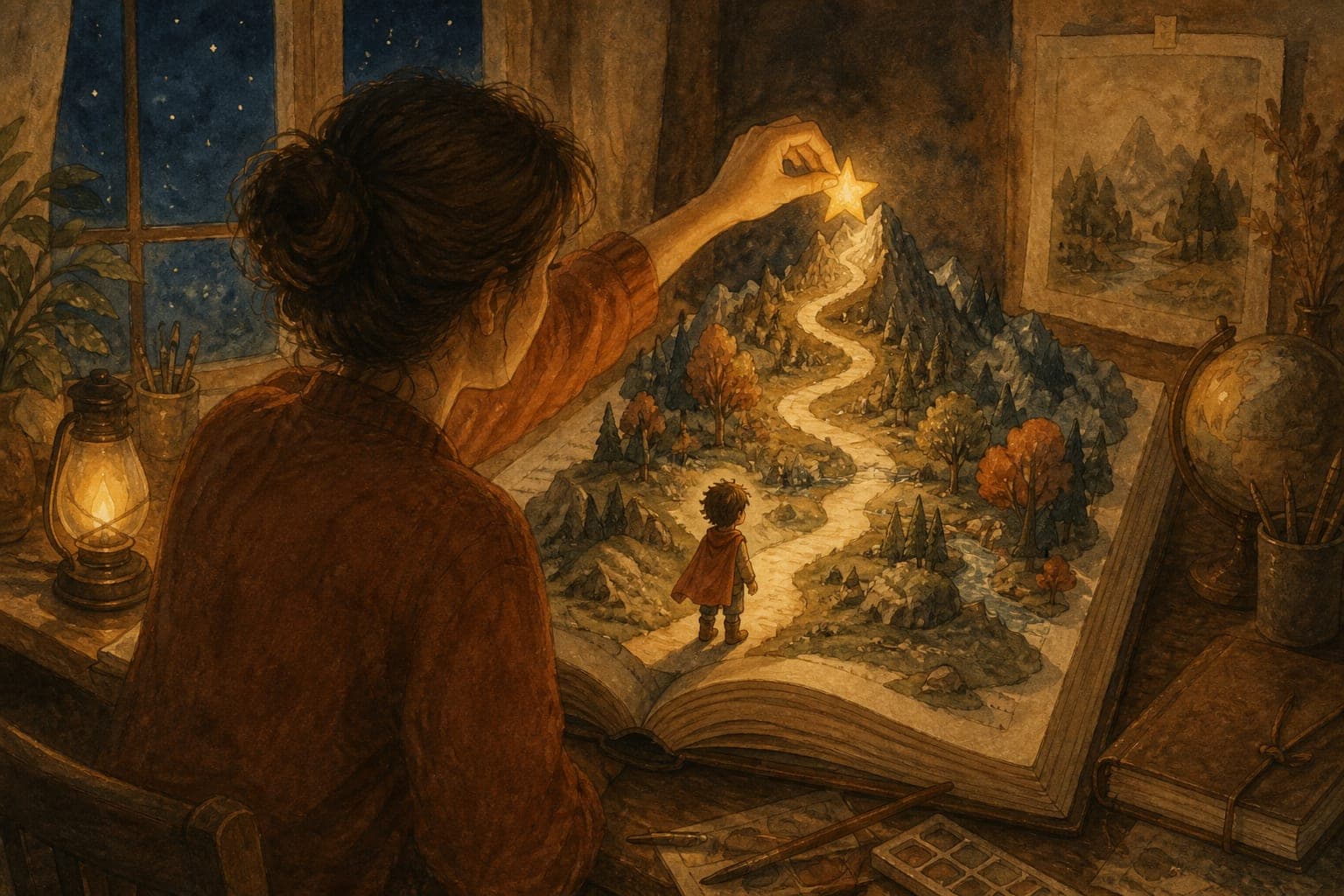
Outcomes-led storytelling means deciding what a story should accomplish for a specific child before deciding what the story is. Instead of browsing books and hoping one helps, you start from the outcome, 'I want bedtime to stop being a battle,' 'I want her less terrified of the first school morning,' 'I want him to know his grandfather', and work backward: what does a story need to contain, for this child, at this age, to move that outcome?
It sounds obvious stated plainly, and almost nobody does it. Children's stories are chosen by cover, by nostalgia, by whatever the library had. This article lays out the method, five steps, each anchored to research, that turns a story from entertainment into an instrument. It is, not coincidentally, the exact sequence the Heirloom Stories interview walks a family through.
Step 1: Name an outcome you could observe
Vague hopes make vague stories. 'I want him to be kinder' gives a story nothing to aim at; 'I want him to stop grabbing toys from his sister and try trading instead' gives it everything. The test: could you *notice* the outcome happening within a few weeks? Calmer lights-out. Walking into the classroom without being peeled off a leg. Asking Grandma a question on the video call. If you couldn't observe it, sharpen it.
This step borrows directly from how clinicians practice bibliotherapy, the therapeutic use of stories, where a book is selected *for a presenting problem*, not for general enrichment. The outcome is the prescription; the story is the dose.
Step 2: Check the outcome against the child's age
A story can only deliver what the listening brain can use. A two-year-old cannot rehearse a future event inside a character, that machinery (theory of mind) comes online around four to five. A three-year-old can absolutely have a fear softened, but through repetition and a brave-scared hero, not through explanation. We've mapped this in detail in our age-by-age guide; the short version is a ladder: soothe (1–2), name and shrink (3–4), rehearse (5–6), mean (7–8). Pick the rung the child is standing on.
Step 3: Build the story around the three active ingredients
- Relevance. The closer the story sits to the child's actual situation, their name, their family's shape, the actual thing they're facing, the less translating the child does and the more the self-reference effect works for you. Deep personalization is an outcomes tool, not a novelty.
- A hero who models the path, not the destination. The character must start where the child is, scared, jealous, sad, and get to the other side by visible, copyable steps. Research on children's perseverance shows they borrow strategies from characters they identify with (see the Batman Effect); a hero who was never scared has nothing to lend.
- A built-in conversation. Decades of dialogic-reading research show the talk around the story drives much of the outcome. An outcomes-led story ends with two or three questions aimed at the outcome, which is exactly what our After the Story section is for.
Step 4: Deliver through repetition, not intensity
One perfect reading changes little; the fortieth ordinary one changes a lot. Children extract new layers from each pass through a familiar story, and the repetition research is blunt about it: same story, repeated, beats variety for learning. For outcomes work, plan on the story living in the bedtime rotation for two to four weeks, starting *before* a foreseeable event when there is one. The story becoming boring to you is not a failure signal; it's the child finishing the extraction.
Step 5: Watch for the outcome, then retire or evolve the story
Outcomes-led means you actually check. Did drop-off get easier? Does she use the story's words for the feeling ('I'm having a Luna day')? Borrowed vocabulary is usually the first sign the story took. When the outcome lands, let the story retire naturally, children stop requesting a story when its work is done, or evolve it: this is why every Heirloom story includes a fresh retelling, so the same hero can face the *next* thing.
Why we built an interview instead of a bookstore
Outcomes-led storytelling is the reason creating a story with us starts with questions rather than templates: who is the child, how old are they, who do they love, and what should this story *do*, help with a new sibling, shrink a fear of thunder, keep a faraway grandfather present, make bedtime gentle again. The interview is steps 1–3 of this method in disguise; the illustrated, narrated keepsake it produces is engineered for step 4 (a private link built for nightly replay, in a voice the child loves); and After the Story hands you step 5's conversation. The method works with library books too, we wrote this article so it would. It just works best when the story was built for the outcome from the first line.
Frequently asked questions
What is outcomes-led storytelling?
A method where you decide what a story should accomplish for a specific child, a calmer bedtime, a braver first day of school, a softened fear, before choosing or creating the story, then build the story backward from that outcome, matched to the child's developmental stage, and deliver it through repeated readings with conversation after.
How long does it take for a story to change a child's behavior?
Plan in weeks, not readings. The typical pattern is two to four weeks of the story living in the bedtime rotation, with the first signs being borrowed vocabulary, the child using the story's words for their own feelings, before visible behavior change at the actual event.
Can regular picture books be used this way, or only personalized ones?
Regular books work, bibliotherapy has used them for decades. Personalization removes the translation step (the child doesn't have to map a generic bear onto their own situation), which tends to matter most when the outcome is specific: this move, this new sibling, this particular fear.
What if the story doesn't produce the outcome?
Check three things in order: the outcome (was it observable and age-appropriate?), the story (does the hero start where your child is and reach the other side in copyable steps?), and the delivery (did it get real repetition, and did anyone ask the after-story questions?). Usually one of the three was missing, most often the repetition.