July 21, 2026 · 6 min read
Why a Familiar Voice Calms a Child: The Neuroscience of Voices We Love
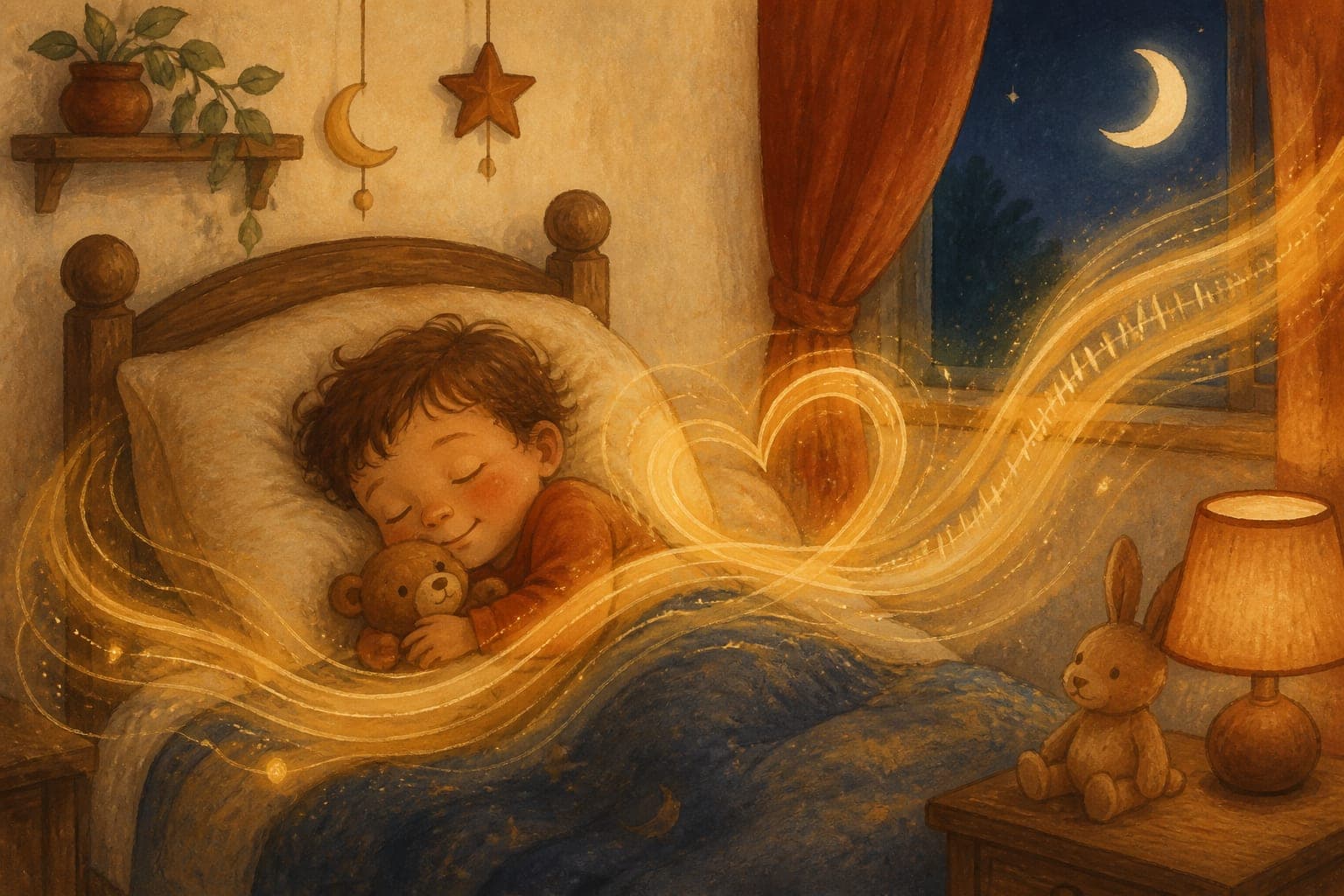
A familiar, loved voice is not just pleasant to a child, it is processed differently by the child's brain. Newborns only days old will work to hear their mother's voice over a stranger's. School-age children identify their mother's voice from less than a second of sound, and hearing it activates reward and emotion circuits that other voices leave quiet. And in one of the most striking findings in the field, a mother's voice alone, over a phone, with no hug available, measurably lowered children's stress hormones after a hard day.
This article walks through the four key studies behind those claims, in plain language, and then explains the design decision they led to at Heirloom Stories: treating the narrator's voice not as a production detail, but as the heart of the keepsake.
The preference starts before birth
By the third trimester, a fetus's auditory system is working, and the sound it hears most, carried both through the air and through the mother's own body, is her voice. Babies arrive already trained on it. In a famous follow-up to their newborn work, DeCasper and Spence (1986) had mothers read the same Dr. Seuss passage aloud daily during late pregnancy; after birth, their newborns preferred that familiar passage over a new one. The rhythm of speech heard in the womb was recognized on the outside.
Newborns will work to hear their mother
In 1980, Anthony DeCasper and William Fifer published a study in *Science* with an elegantly simple design. Newborns less than three days old sucked on a pacifier wired to a recorder; sucking in one pattern played their mother's voice, another pattern played a stranger's. The babies learned the rule and adjusted their sucking to produce their mother's voice. A days-old infant, who cannot yet focus its eyes across a room, will already work for the sound of a specific person. Voice preference is among the very first preferences a human being demonstrates.
A mother's voice lights up a child's brain differently
In 2016, Daniel Abrams and colleagues at Stanford put children aged 7 to 12 in an fMRI scanner and played them short clips of nonsense words, under one second each, spoken either by their own mother or by unfamiliar women. Two results stand out. First, the children identified their mother's voice with about 97% accuracy from these sub-second clips. Second, the mother's voice didn't just activate the brain's standard voice-processing areas more strongly, it recruited additional circuitry: reward regions, emotion-processing regions, and face-recognition areas, as if the voice alone summoned the whole person.
The researchers also found that the strength of this neural response predicted the children's social communication abilities. A loved voice, in other words, is not background audio to a child's brain. It is a signal that organizes attention and feeling in a way no unfamiliar narrator, however professional, can reproduce.
The voice alone can lower stress hormones
Perhaps the most remarkable study in this literature comes from Leslie Seltzer, Toni Ziegler, and Seth Pollak (2010). Girls aged 7 to 12 completed a deliberately stressful task, public speaking and mental math in front of strangers. Afterward, they were comforted in one of three ways: their mother in person, their mother's voice over the phone, or a text-message exchange with her. The in-person and phone groups showed the same physiological recovery: cortisol (the stress hormone) fell and oxytocin (the bonding hormone) rose. The phone call was as good as the hug. The text messages, same mother, same words available, did essentially nothing.
The comfort wasn't in the information; it was in the sound. The pitch, warmth, and rhythm of a loved voice carry a physiological signal that written words do not.
What this means for how stories should be narrated
Put these findings together and a design principle falls out: for a child, the narrator is not interchangeable. A story read by Grandma is a different neurological event than the same story read by a stranger, more attention, more feeling, and a calming signal that matters most exactly when stories are used: at bedtime, and during hard transitions.
This is why Heirloom Stories is built voice-first rather than story-first. Every keepsake is narrated in a voice the child loves, recorded page by page by the family member themselves, taught to an AI reader from about a minute of their consented speech when reading a whole book aloud isn't possible, or read by a warm storybook narrator as a fallback. The science also sets the priorities honestly: a live lap and a live voice remain the gold standard, and the keepsake is designed to sit inside that ritual, played together at bedtime, not to replace it.
Frequently asked questions
Can babies really recognize their mother's voice at birth?
Yes. DeCasper and Fifer's 1980 study showed newborns under three days old would adjust their pacifier sucking to hear their mother's voice over a stranger's, and later work showed newborns even recognize specific passages read aloud during the third trimester. Hearing begins in the womb, so babies arrive already familiar with the voices around them.
Does a recording of a parent's voice have the same effect as the parent in person?
Not identical, but the voice channel itself carries real weight: in Seltzer and colleagues' 2010 study, a mother's voice over the phone lowered children's cortisol and raised oxytocin as effectively as in-person comfort, while text messages did not. A recorded story in a loved voice is best understood as a genuine supplement to, not a substitute for, reading together in person.
Do these findings apply to grandparents' voices too?
The landmark studies used mothers' voices, so that's where the direct evidence is strongest. But the mechanism, familiarity plus emotional attachment, is not exclusive to mothers, and children clearly form strong voice attachments to fathers, grandparents, and other close caregivers. Any voice a child knows and loves carries more signal than a stranger's.
Is an AI clone of a parent's voice 'familiar' to a child in the same way?
There is no direct research on this yet. A good voice clone preserves the pitch, timbre, and pacing that make a voice recognizable, which are the features children's brains key on, but honest services should present it for what it is: a way to extend a loved voice to a whole story when recording one isn't possible, with the person's consent, not a replacement for the real thing.