June 30, 2026 · 6 min read
How Stories Help Children Through Big Changes: New Sibling, First Day of School, Moving
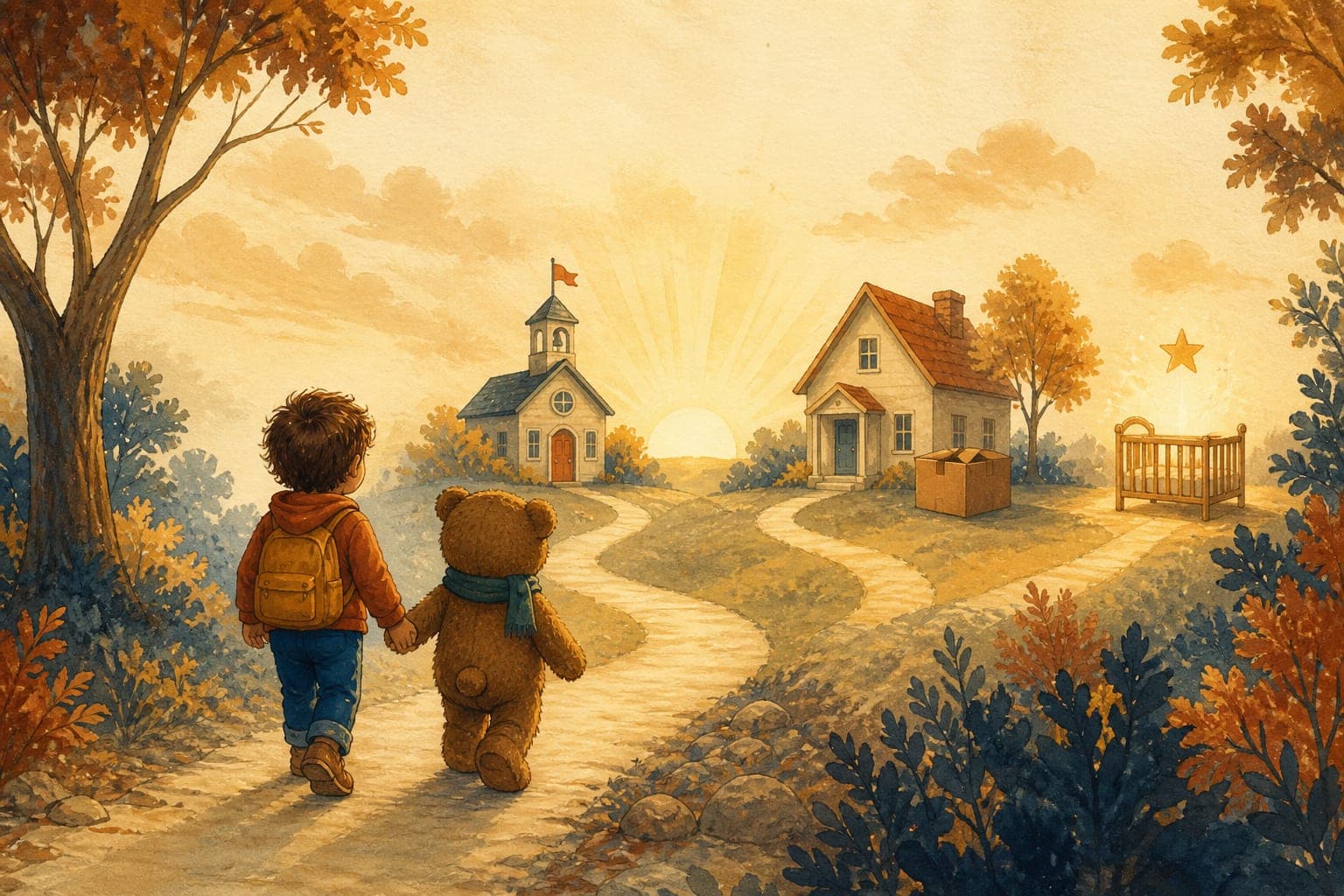
Stories help children through big changes because they offer something direct conversation can't: safe distance. A four-year-old who shuts down when asked "how do you feel about the new baby?" will happily discuss, at length, how a small bear feels about the new cub in the den. The bear carries the feelings; the child examines them from a step away, decides what the bear should do, and quietly borrows the answer. Therapists have formalized this as bibliotherapy, but parents have used it forever, it's why fairy tales are full of exactly the fears childhood is full of.
This article covers how to pick or create the right story for a change your child is facing, how to have the conversation after the story (which does half the work), and specific guidance for the four most common big changes: a new sibling, starting school, moving, and a persistent fear.
Why a story reaches a child when reassurance doesn't
Reassurance ("the first day will be fun, you'll see!") asks a child to take an adult's word against their own fear, a bet children rarely take. A story does something different: it lets the child *watch someone their size go through the thing and come out the other side*. The character gets to be scared, which permits the child to be scared. The character finds a way through, which suggests a way through exists. And crucially, the child reaches the conclusion themselves rather than being handed it.
Repetition is part of the mechanism. Children ask for the same story nightly precisely when it's doing work for them, each pass is another safe rehearsal. When the story stops being requested, it's often because the change has been digested.
The conversation after the story does half the work
Researchers who study shared reading keep finding that the back-and-forth around a story drives much of its benefit, the practice known as dialogic reading. For big changes, that means the questions after the last page are not optional extras. Keep them open and low-stakes, and always land on the child's own life at the end:
- "Why do you think the bear hid under the bed?", lets the child articulate the fear at one remove.
- "What would you have told him?", puts the child in the wise role, which is where confidence grows.
- "Has anything like that ever happened to you?", the bridge home. Don't force it; some nights the child will cross it, some nights not.
This is why every Heirloom Stories keepsake ends with After the Story: two or three talk-about questions and one small real-world activity written for that specific story and that specific child.
A new sibling
- Start 3–4 weeks before the due date. The story should feature the older child as the capable one, the big sister who knows things, not the displaced one.
- Let the story admit the hard part. Stories where the hero briefly wishes the baby would go back are more effective than relentlessly sunny ones; they license the forbidden feeling.
- After the birth, reread it. The story becomes shared vocabulary: "remember when Luna the fox felt squeezed out? Is today a Luna day?"
First day of school or daycare
- Rehearse the sequence, not just the feeling. The most reassuring stories walk through the actual day: arrival, where coats go, snack time, and, critically, the pickup. Fear of school is often fear that pickup never comes.
- Give the hero one concrete tool: a goodbye ritual, a brave breath, a question to ask another kid. The child will carry the same tool in.
- Read it after school starts too. The story helps process the day, not just anticipate it.
Moving to a new home
- Grieve the old before selling the new. A good moving story lets the hero say a real goodbye, to a room, a tree, a neighbor, before discovering anything good about the new place. Skipping the goodbye is the most common adult mistake.
- Keep the constants visible. The story should show what moves with the child: the family, the bed, the dog, the bedtime ritual itself.
- For long-distance moves, a story narrated in a faraway grandparent's voice does double duty, it processes the move and proves the voice comes along.
A fear that won't budge: dark, dogs, thunder
- Never mock the fear in the story, even gently. The hero's fear must be treated as reasonable; the story's job is to make the child feel understood first and braver second.
- Shrink the monster gradually. Effective fear stories give the feared thing a knowable shape, thunder becomes clouds bumping, the dark becomes where the stars live. Understanding shrinks what avoidance feeds.
- Pair the story with one tiny real step: one minute with the lamp off, waving at a dog across the street, ideally the same step the hero took.
Why a personalized story helps here more than anywhere
Generic books about new siblings or first days exist and many are excellent. But every one requires the child to translate: different name, different family, a dog instead of their cat, a situation that's close but not theirs. A personalized story removes the translation. When the hero has your child's name, your family's shape, and *their* exact situation, the move to Grandma's city, the fear of your building's stairwell, the safe distance stays, but the relevance becomes total. That's the specific gap Heirloom Stories was built to fill: you tell us about the child and the thing they're facing in a short interview, and we write, illustrate, and narrate a story about precisely that, in a voice they love.
Frequently asked questions
How far in advance should I start reading a story about an upcoming change?
Two to three weeks before a foreseeable change like a new sibling, a move, or a first day of school. That allows the nightly repetition that does the actual work. For a change that already happened, start now, stories help children process backward as well as forward.
What if my child doesn't want to talk after the story?
Don't force it. The story is doing work even without the conversation, and children often bring it up hours or days later, sideways ('Mama, was the bear scared at pickup?'). Keep offering one open question a night and let silence be an acceptable answer.
Do stories actually help with childhood anxiety?
Stories are a well-established gentle tool, the formal practice is called bibliotherapy, and they work best for everyday fears and transitions. They are a complement to, not a substitute for, professional help: if a fear is disrupting sleep, eating, or daily life for weeks, talk to your pediatrician.
Is a personalized story better than a classic picture book for a big change?
They do different jobs. Classic books are beautifully crafted and time-tested; a personalized story matches the child's exact situation so no translation is needed, which tends to matter most for changes that are specific (moving to a particular place, a particular fear) rather than universal. Many families use both.