July 14, 2026 · 5 min read
What Is a Personalized Children's Book? A Parent's Guide for 2026
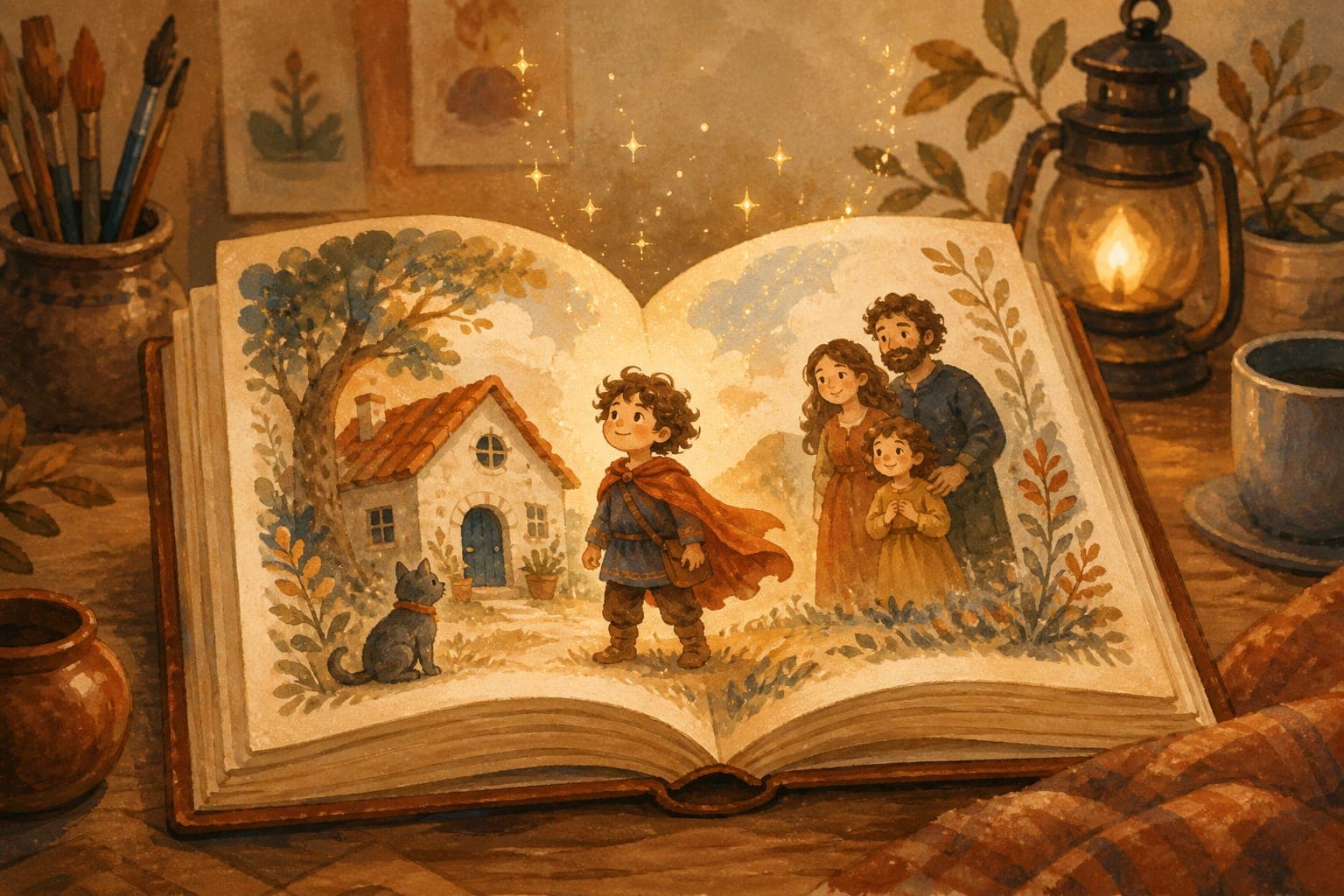
A personalized children's book is a storybook created for one specific child rather than for children in general. At minimum, that means the child's name appears in the text. At its best, it means the entire story, the plot, the illustrations, the supporting characters, and even the voice reading it aloud, is built around who that child actually is: their family, their pet, the thing they're scared of this month, the joke only Grandpa makes.
The category has changed dramatically. What used to mean a name printed into a stock template can now mean a genuinely one-of-a-kind story. This guide explains the three generations of personalization, why the difference matters for children, and what questions to ask before buying one.
The three generations of personalized books
It helps to think of personalized children's books in three generations, because products from all three are on the market today and they are priced and marketed similarly despite being very different things.
- Name-insertion books (1980s–today). A pre-written template where the child's name is dropped into the text, and sometimes a dedication page is added. The story is identical for every child. These are inexpensive and quick, but the personalization is skin-deep, a child past age four usually notices the story isn't really about them.
- Appearance-matched books (2010s–today). Services where you pick a hair color, skin tone, and glasses so the illustrated hero resembles the child. The story is still a fixed template, but the visual match makes it land better with toddlers and preschoolers.
- Fully custom stories (2020s–today). The newest generation, made practical by generative AI: the story itself is written for the child. The plot can be about their new baby brother, their fear of thunderstorms, or the summer trip to their grandmother's lake house. Illustrations are painted for that story, and some services can even narrate it in a family member's real voice.
Why deeper personalization matters to a child
Personalization isn't just a novelty. Decades of shared-reading research point to two ingredients that make reading time more powerful: relevance and relationship. Children attend longer and talk more about stories that connect to their own lives, which is exactly what researchers encourage when they teach dialogic reading, the practice of pausing to ask a child questions about the story. A story where the child is the hero facing their real situation hands parents those conversation openers for free.
The relationship half is the voice. Infants prefer their parents' voices from the first days of life, a finding that goes back to DeCasper and Fifer's well-known 1980 study, and a familiar, loved voice holds a child's attention in a way no professional narrator can. That's why the newest personalized books treat narration as part of the personalization, not an accessory: the same story hits differently when Grandma reads it.
What to check before you buy a personalized book
- How deep does the personalization go? Name only, appearance, or the actual story? Ask whether two different children would receive meaningfully different books.
- Can it address a real situation? The most useful personalized stories help with something, a new sibling, starting school, a big move, a fear. If the service only offers generic adventure templates, it can't do this.
- Who reads it aloud? Physical books are read by you, which is wonderful. Digital keepsakes may offer narration, check whether it can be a family member's real voice, and how that voice is handled (consent, deletion, whether it's used for anything else).
- Do you approve it before it's final? Custom-written stories should let you read every word before the child ever sees it.
- What do you actually own? A physical book, a private link, an audio file? Check whether links expire and whether you can download the story.
Where Heirloom Stories fits
Heirloom Stories (heirloomstories.ai) is a third-generation service: it creates a fully custom, illustrated story for one child. It starts with a short guided interview about the child, their people, their world, and what the story should help with, then writes and illustrates a one-of-a-kind story, and narrates it in a voice the child loves: recorded page by page, taught to an AI reader from about a minute of a family member's speech, or read by a warm storybook narrator. The creator hears every word before anything is sent, and the finished story arrives as a private keepsake link that never expires.
It's deliberately not a replacement for reading together. The keepsake is a few minutes long and designed for laps and bedtime, made to be played together, talked about, and replayed until it's memorized.
Frequently asked questions
What ages are personalized children's books best for?
Roughly ages 2 to 8, with a sweet spot around 3 to 6, old enough to recognize themselves in a story, young enough that being the hero of a book still feels like magic. Voice-narrated keepsakes also work for younger toddlers, who respond to the familiar voice before they follow the plot.
How much does a personalized children's book cost?
Name-insertion and appearance-matched printed books typically cost $25–$45. Fully custom AI-written stories vary more; Heirloom Stories, for example, creates a fully custom illustrated and narrated story for $9.99 at its launch price.
Are AI-personalized story books safe for kids?
The main things to check are content review and voice handling. A trustworthy service lets an adult read and approve every word before the child sees the story, keeps stories private rather than public, and, if it offers voice narration, gets explicit consent for any recorded voice, never uses it to train other systems, and lets you delete it at any time.
Do personalized books actually help children learn?
The evidence for shared reading itself is very strong, vocabulary, attention, listening comprehension, and later reading skill all benefit. Personalization helps mainly by increasing engagement and by giving families a natural way to talk about the story afterward, which is where much of the developmental benefit lives.