July 7, 2026 · 5 min read
AI Voice Cloning for Family Keepsakes: How It Works and How to Keep It Safe
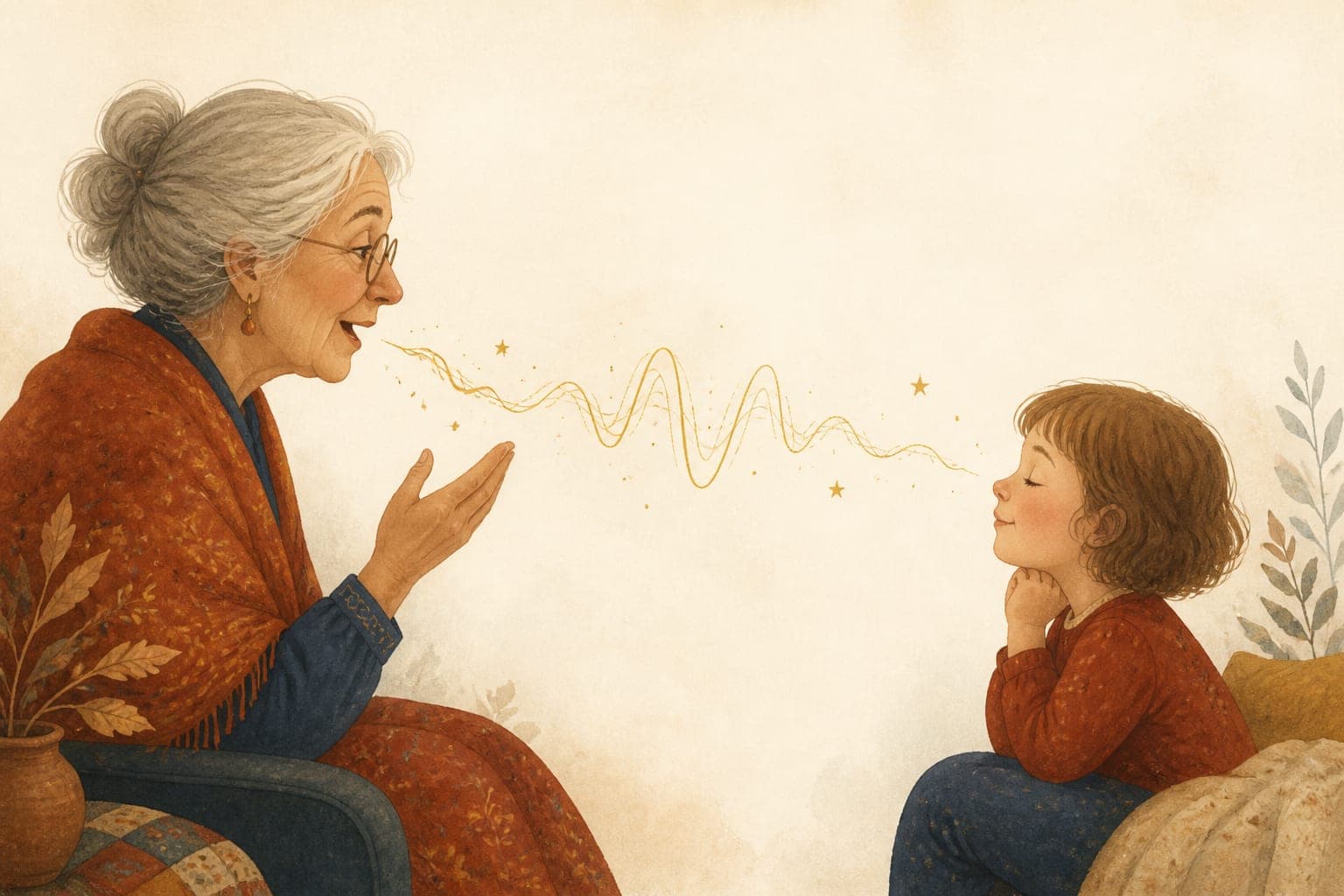
AI voice cloning is a technology that learns the sound of a specific person's voice from a short audio sample, often under a minute, and can then speak new sentences in that voice. In a family context, it means a grandmother who tires after reading one page can still narrate an entire storybook; a parent deployed overseas can read tonight's bedtime story; and a family facing a diagnosis that will take a voice, like ALS, can preserve it while there's time.
It's also a technology with real abuse potential, which is why the same families who want it are right to be cautious. This article explains how voice cloning actually works, what the legitimate keepsake uses look like, and the specific questions to ask any service before you upload a recording of someone you love. (For why a familiar voice matters so much to children in the first place, see the neuroscience of voices we love.)
How voice cloning works, in plain language
A voice cloning system doesn't store and replay snippets of the original recording. Instead, a neural network listens to the sample and learns a compact mathematical description of *how that voice sounds*, its pitch, timbre, pacing, and the way it moves between sounds. Given new text, the system then generates entirely new speech that matches that description. This is why one minute of Grandma talking about her garden is enough for the system to read a story she never actually recorded.
Quality depends far more on the sample's clarity than its length: one minute of a single person speaking naturally in a quiet room beats ten minutes of a noisy birthday video. The result is convincing but not perfect, families usually describe good clones as "uncannily her, maybe on a calm day."
The legitimate family uses
- Narration beyond stamina. An elderly relative records one minute; an AI reader narrates the whole storybook in their voice. The person approves the result before any child hears it.
- Presence across distance. A parent who travels, is deployed, or works nights can be part of bedtime every night, in their own voice.
- Voice preservation. Families facing ALS, throat cancer, or dementia increasingly record a voice sample early. This practice, sometimes called voice banking, is actively encouraged by ALS clinics, but a warm reading voice for the grandchildren is something clinical voice banking doesn't cover.
- Memorial keepsakes. Some families use recordings of a relative who has already passed to create one final story. This is emotionally powerful and ethically serious, it should only ever happen at the family's own initiative, with the recording they own and the consent of the closest survivors.
The questions to ask before uploading anyone's voice
Any service asking for a recording of a loved one's voice should have crisp answers to all five of these. Vague answers to any of them are a reason to walk away.
- Is consent required and recorded? The person whose voice it is should knowingly agree. Reputable services require this contractually and refuse voices of non-consenting people.
- Will the voice train anything else? The only acceptable answer is no. Your relative's voice should be used to narrate your story, not to improve a general-purpose model.
- Can I delete it, and does deletion actually delete? You should be able to remove the voice sample and the learned voice at any time, permanently.
- Who can access the output? Stories and audio should be private by default, a link only your family holds, not a public gallery.
- Do I hear the result before anyone else does? You should be able to review every generated word and re-do it before a child ever hears it.
How Heirloom Stories handles voices
Heirloom Stories uses voice technology in exactly one way: to narrate the story you create for your child, in a voice your family chooses and consents to. You can record the story fully yourself page by page, provide about a minute of speech for an AI reading, or skip voice cloning entirely and use the built-in storybook narrator. Voices are never used to train anything, the creator hears every word before the story is sent, the keepsake link is private, and you can delete a voice at any time.
That policy isn't a legal formality, it's the product thesis. The entire value of a voice keepsake comes from trust, and a voice that could leak into anything else isn't a keepsake.
Frequently asked questions
How much audio is needed to clone a voice?
Modern systems produce a convincing clone from roughly 30 to 60 seconds of clear, natural speech from one person in a quiet room. Clarity matters much more than length.
Is it legal to clone a family member's voice?
With that person's consent, generally yes for personal, private use, consent is both the ethical and, increasingly, the legal line, as several US states now regulate voice likeness. Cloning someone's voice without their knowledge, even a relative, is where legal and ethical trouble starts. For a deceased relative, rights typically rest with the estate or closest survivors.
Can AI narrate a story in a deceased relative's voice?
Technically yes, if the family holds a clear recording of them speaking. Ethically, it should only happen at the family's own initiative with the consent of the closest survivors. Many families find it profoundly comforting; others find it uncomfortable, there is no universal right answer, and a trustworthy service will treat the request with care rather than as a feature to upsell.
How do I know a voice cloning service is safe?
Check for five commitments in writing: consent is required, the voice never trains other models, deletion is permanent and self-serve, output is private by default, and you review the result before it's shared. Heirloom Stories publishes all five as policy.