June 22, 2026 · 5 min read
The Benefits of Reading Aloud to Children: What the Research Actually Says
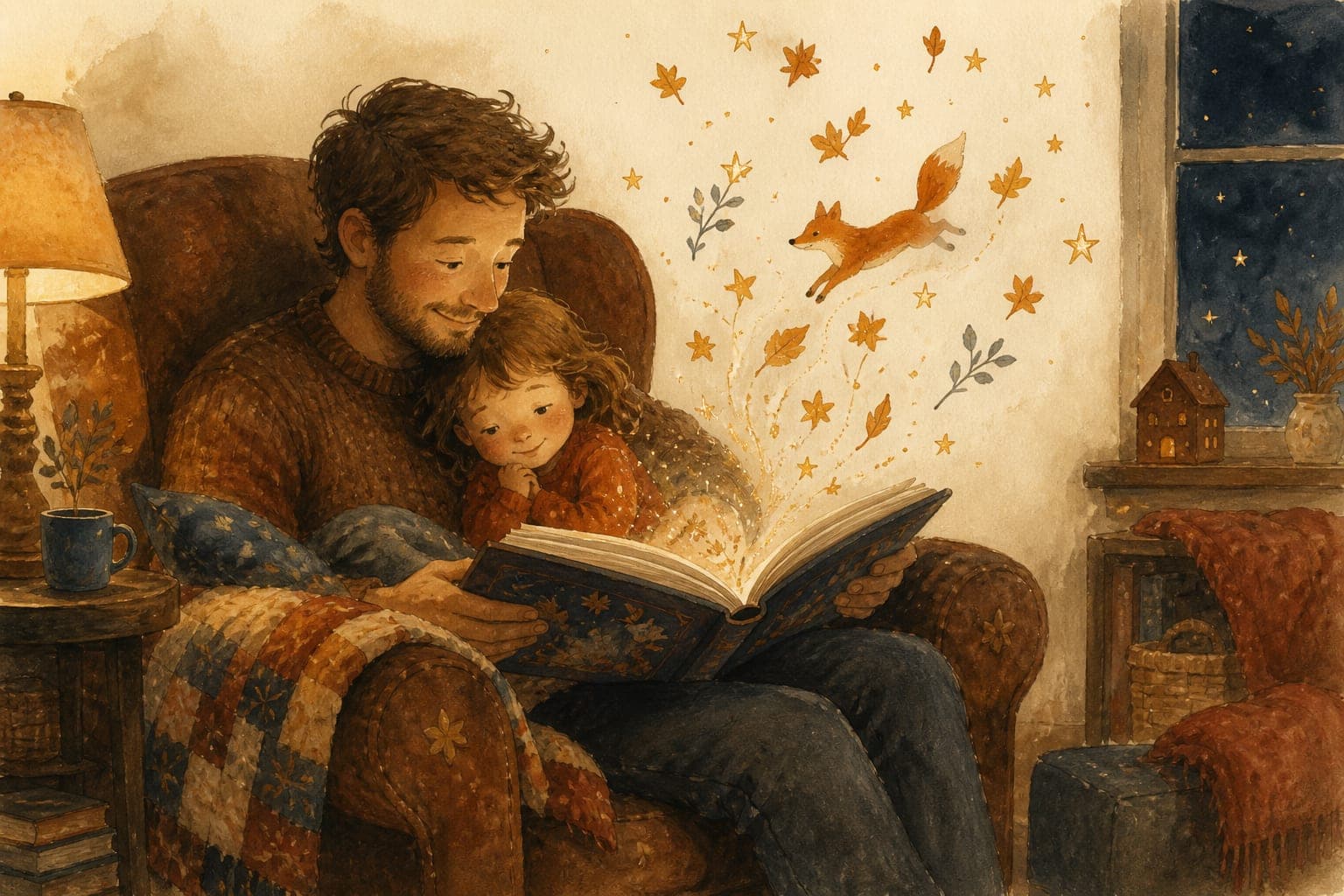
Reading aloud to a child is one of the most consistently supported practices in all of child development research. It builds vocabulary, listening comprehension, attention span, print awareness, and, later, reading skill itself. It is also attachment time: a child leaning against someone they love learns that books and calm, close attention feel like safety. The American Academy of Pediatrics recommends reading aloud together beginning in infancy, treating it as something close to preventive care.
But the research says something most parents have never been told: how you read matters as much as how much you read. This article walks through the main findings in plain language, what's solidly established, what the numbers actually are, and what to do with them tonight.
The million-word gap
In 2019, researchers at Ohio State University led by Jessica Logan estimated how many words children hear from books before age five. The differences are enormous: a child whose family reads five books a day hears about 1.4 million more words by kindergarten than a child who is never read to. Even one book a day adds up to roughly 290,000 extra words over those years.
The point isn't the raw count, it's what kind of words they are. Picture books use rarer, more varied vocabulary than everyday speech. Dinner-table conversation rarely includes words like *gleaming*, *burrow*, or *reluctant*; books are full of them. Children who are read to regularly arrive at school having already met the language school will be conducted in.
Dialogic reading: the questions do half the work
In 1988, Grover Whitehurst and colleagues published a study that reshaped how researchers think about shared reading. Parents were coached to stop reading *at* their children and start reading *with* them, pausing to ask open questions ("What do you think she'll do next?" "Why was he sad?"), following the child's answers, and gradually letting the child tell more of the story. After just a month, children in the dialogic reading group had measurably accelerated language development compared to children who were read to the ordinary way, and the effects were still visible at follow-up.
Decades of replication later, dialogic reading is one of the most reliable interventions in early-language research. It works because conversation is a serve-and-return game, the pattern the Harvard Center on the Developing Child identifies as a core ingredient of healthy early brain architecture. The child offers a thought; the adult receives it and returns something slightly richer. A story is the perfect serve: it hands the two of you something concrete, emotional, and shared to talk about.
- Ask open questions, not quiz questions, "What would you have done?" beats "What color was the hat?"
- Follow the child's answer wherever it goes, then add one new word or idea to it.
- Connect the story to the child's life: "Has that ever happened to you?"
- Let the child take over pages they know. Being the teller is the goal.
Why the voice reading the story matters
In a classic 1980 study, Anthony DeCasper and William Fifer showed that newborns just days old would change their sucking patterns to hear a recording of their own mother's voice rather than a stranger's. Voice preference is one of the very first preferences a human being shows. A familiar, loved voice calms a child, holds their attention, and signals *this is for you* in a way no professional narrator can.
This is why the same story read by Grandma is a genuinely different experience from the same story read by a stranger, and why audio keepsakes narrated in a family member's real voice occupy a different category from ordinary audiobooks. The story is the vehicle; the voice is the relationship. We cover the full body of research, including the Stanford brain-imaging work, in the neuroscience of voices we love.
What to actually do tonight
- Read something, in any form. The gap between zero books and one book a day is the biggest gap of all.
- Ask one question per story. You don't need a method, one open question and a real conversation about the answer captures most of the dialogic reading benefit.
- Reread the favorites. Repetition is a feature, not a bug: children extract new language from each pass through a familiar story.
- Keep loved voices in the ritual. If a grandparent is far away, a story recorded or narrated in their voice keeps them part of bedtime across any distance.
That last point is what Heirloom Stories was built for: a one-of-a-kind illustrated story about your child, read aloud in a voice they love, with gentle after-the-story questions written for that story and that child, because the conversation after the last page is where half the magic lives.
Frequently asked questions
At what age should you start reading aloud to a child?
From birth. The American Academy of Pediatrics recommends beginning in infancy. Babies don't follow plots, but they absorb rhythm, tone, and the association between a loved voice, closeness, and books.
How many minutes a day should I read to my child?
There's no magic number, but even 10–15 minutes a day, one or two picture books, produces the word-exposure differences researchers measure. Consistency matters more than duration.
Is being read to by a recording as good as being read to in person?
In-person shared reading is the gold standard because of the back-and-forth conversation it enables. A recording in a loved one's voice is a genuinely valuable supplement, especially for keeping distant family present, and works best when an adult listens alongside the child and talks about the story afterward.
What is dialogic reading in simple terms?
Dialogic reading means turning story time into a conversation: pause to ask the child open questions about the story, build on their answers, and gradually let them do more of the telling. Studies since 1988 show it speeds up language development beyond ordinary reading aloud.