June 16, 2026 · 5 min read
Why Children Want the Same Story Every Night: The Science of Repetition
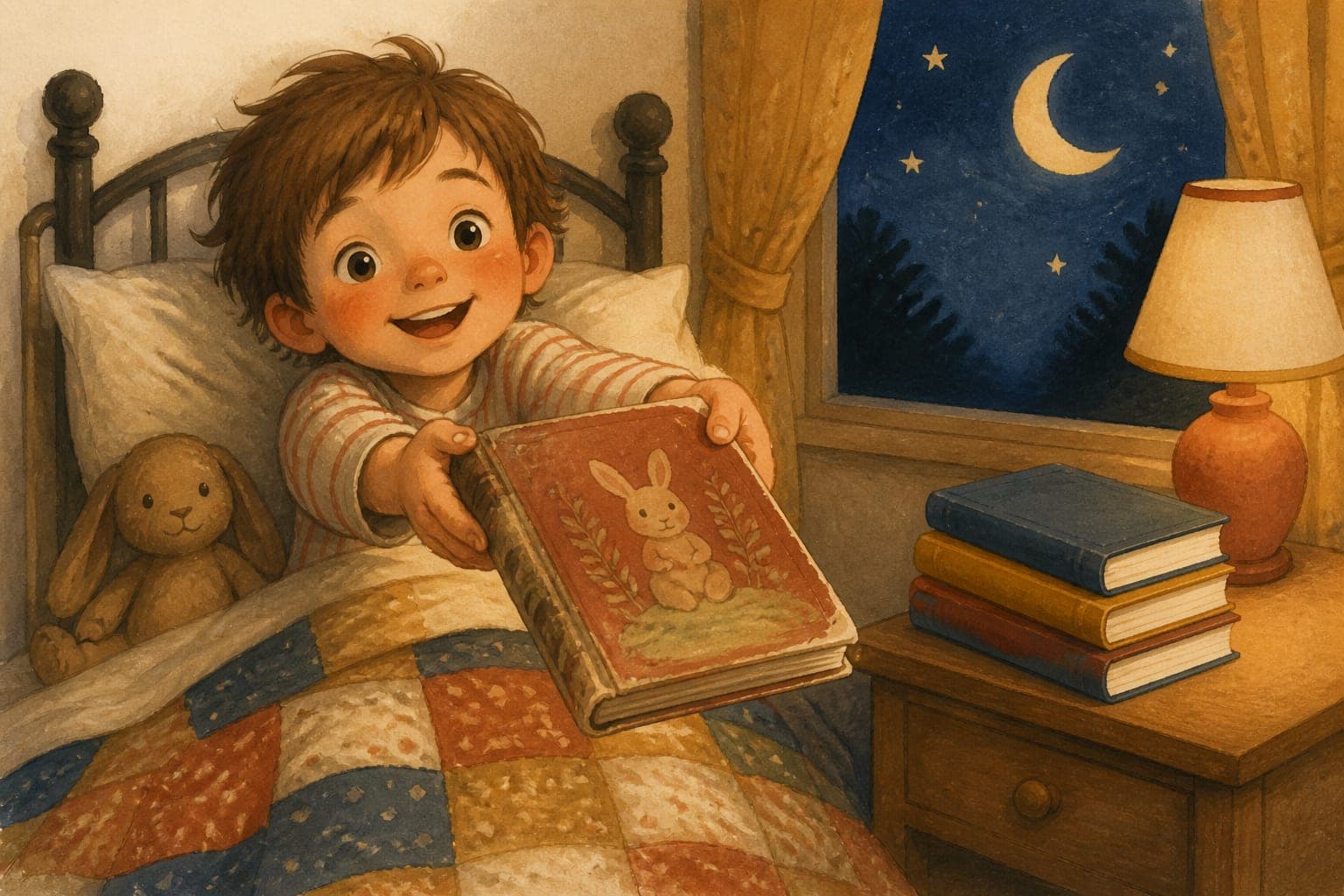
Every parent knows the ritual: the same book, again, for the fortieth night, with corrections issued if you skip a page. It can feel like a rut. The research says it's the opposite, repetition is the engine of early learning, not a failure of curiosity. In controlled studies, three-year-olds who heard the same story repeatedly learned new words significantly better than children who heard the same words spread across different stories. And the repetition of the ritual itself, same time, same voice, same story, is independently linked to better sleep and calmer evenings.
Here's what's actually happening in a child's brain during the fortieth reading, what the sleep research adds, and why this science convinced us that a story keepsake has to be built for replay.
The experiment: same story vs. different stories
In 2011, Jessica Horst, Kelly Parsons, and Natasha Bryan published a study with a tidy design. Three-year-olds encountered the same set of made-up words (like a 'sprock') embedded in storybooks. One group heard the *same* story read three times; another heard the words the same number of times, but spread across *three different* stories. A week's worth of sessions later, the same-story children had learned and retained the new words markedly better. The paper's title says it plainly: contextual repetition promotes word learning from storybooks.
Why would hearing less variety teach more? Because a familiar context is a stable scaffold. When everything else in the story is known, the one unknown word stands out, gets the child's full processing, and gets anchored to the same reliable surroundings each time.
What each rereading is for
A first reading is mostly plot triage: who is this, what's happening, does it end okay. Rereadings progressively free up attention for everything else. Researchers who study repeated shared reading observe children doing visibly different work on later passes:
- New vocabulary gets isolated and tested: this is the Horst effect above.
- Story structure gets internalized: beginning, problem, resolution, which is the template children later use to understand every story, and to tell their own.
- Emotional beats get rehearsed safely. The scary page is scary the first time and *deliciously* scary the tenth time; controlled re-exposure is how children practice regulating a feeling.
- Prediction gets rewarded. Knowing what's on the next page and being right, every time, is one of a young child's purest experiences of mastery. It's why they correct you when you skip a page, you broke the proof that the world is learnable.
The routine is doing its own work: the sleep evidence
Separately from what repetition does for learning, the repetition of the bedtime *ritual* has measurable effects on sleep. In 2015, Jodi Mindell and colleagues published a study of more than 10,000 families across 14 countries. Children with a consistent nightly bedtime routine fell asleep faster, went to bed earlier, woke less during the night, and slept longer, and the relationship was dose-dependent: the more nights per week the routine happened, the better the sleep. A familiar story in a familiar voice is a textbook 'sleep cue': a signal the child's body learns to associate with winding down.
Why we built the keepsake for replay
This research shaped Heirloom Stories in a specific way: a keepsake story is not a one-time gift moment, its value is realized on the thirtieth listen. So the keepsake is a private link that never expires, designed to slot into the nightly routine: one story, a few minutes long, in a voice the child loves, the same every night in exactly the way children need it to be. And because a well-loved story eventually gets worn smooth, every story includes one fresh retelling, a repaint, and a re-recording, so when the child is ready for the next layer, the story can grow once without losing the hero.
The After the Story questions lean on repetition too: the same two or three questions land differently as the child's answers mature across weeks of listens, which is half the fun of asking them.
Frequently asked questions
Is it bad that my child only wants one book over and over?
No, it's developmentally ideal behavior. Repeated readings of the same story produce better word learning than the same exposure spread across different books, and the repetition itself is how children internalize story structure and practice emotions safely. The phase passes on its own once the book's work is done.
How many times should I reread the same story to my child?
As many times as they ask. In research settings, benefits show up within a handful of repetitions, but there's no known downside to more. A practical rhythm many families use: the requested favorite first, then one new or rotating book alongside it.
Do bedtime stories actually help children sleep?
A story as part of a consistent routine does. Mindell and colleagues' 2015 study of over 10,000 families found consistent bedtime routines associated with faster sleep onset, fewer night wakings, and longer sleep, with stronger effects the more consistently the routine happened. The story acts as a reliable wind-down cue.
Does listening to the same recorded story every night have the same benefit as being read to?
It keeps the repetition and routine benefits, and if the recording is in a loved one's voice it keeps the familiar-voice benefit too. What a recording alone can't do is the back-and-forth conversation, so it works best played together, with a question or two after, which is why replayable story keepsakes should end with prompts for exactly that.